
top the Burnout Cycle: 8 Leadership Mistakes You Can’t Afford to Make

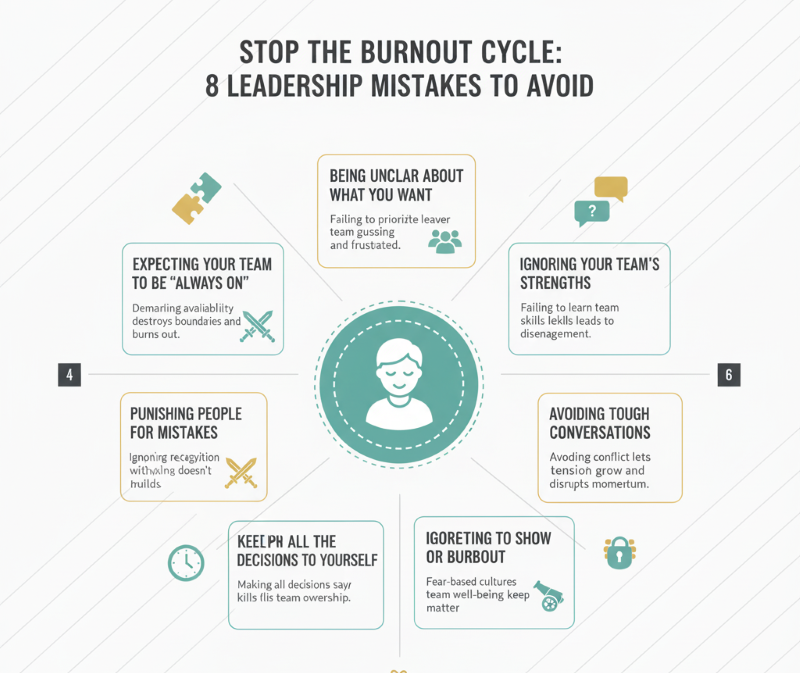
top the Burnout Cycle: 8 Leadership Mistakes You Can’t Afford to Make
In today’s fast-paced work environment, leadership is more challenging and critical than ever. We all strive to be effective leaders, to inspire our teams, and to drive success. Yet, even with the best intentions, many leaders inadvertently fall into patterns that don’t just hinder performance but actively contribute to team burnout. Burnout isn’t just a buzzword; it’s a real threat to productivity, morale, and employee retention. It’s time to shine a light on the common pitfalls that transform enthusiastic teams into exhausted ones. This post, inspired by Dr. Christian Poensgen’s insights, will walk you through eight critical mistakes, offering actionable advice to ensure your leadership empowers, rather than exhausts.
Body Paragraph 1: The Foundation of Leadership – Understanding Burnout (approx. 150 words) Before diving into the mistakes, let’s briefly define burnout. It’s more than just being tired; it’s a state of physical, emotional, and mental exhaustion caused by prolonged or excessive stress. For teams, this can manifest as decreased motivation, cynicism, poor performance, and increased absenteeism. As leaders, preventing burnout isn’t just a moral imperative; it’s a strategic necessity. A burned-out team is an unproductive team. By proactively identifying and addressing the root causes – many of which stem from leadership practices – we can build more resilient, engaged, and high-performing units. Our role extends beyond task delegation; it encompasses cultivating a supportive and sustainable work environment.
Mistake 1: Ignoring Your Team’s Strengths
- The Problem: Many leaders focus too heavily on perceived weaknesses or assign tasks based on availability rather than ability. This leads to team members feeling underutilized or constantly struggling in roles that don’t align with their natural talents.
- The Burnout Factor: When individuals aren’t playing to their strengths, work becomes a constant uphill battle. This lack of flow and inherent difficulty is incredibly draining, leading to frustration and disengagement.
- The Solution: Implement regular talent assessments, engage in one-on-one discussions about career aspirations and strengths, and strategically delegate tasks to leverage individual proficiencies. A strengths-based approach boosts confidence and makes work feel more rewarding.
- Keywords: strength-based leadership, talent management, employee engagement, skill utilization
Mistake 2: Being Unclear About What You Want
- The Problem: Vague instructions, shifting priorities, or a lack of clear objectives leave teams adrift. They spend valuable time guessing what needs to be done, or worse, working on tasks that don’t align with the actual goal.
- The Burnout Factor: Constant uncertainty and the fear of getting it wrong are mentally exhausting. It creates an environment of anxiety and inefficiency, where effort doesn’t always translate into impact.
- The Solution: Define SMART (Specific, Measurable, Achievable, Relevant, Time-bound) goals. Communicate expectations clearly and frequently. Encourage questions and provide regular feedback to ensure everyone is aligned.
- Keywords: clear communication, goal setting, team clarity, performance expectations
Mistake 3: Avoiding Tough Conversations
- The Problem: Leaders often shy away from addressing conflict, underperformance, or sensitive issues to maintain an illusion of harmony.
- The Burnout Factor: Unresolved conflict festers, creating tension and distrust within the team. Poor performance by one can burden others, leading to resentment and an uneven distribution of workload.
- The Solution: Develop your emotional intelligence and conflict resolution skills. Approach difficult conversations with empathy and a focus on solutions, not blame. Timely and constructive feedback is essential for growth and team health.
- Keywords: conflict resolution, constructive feedback, difficult conversations, team harmony
Mistake 4: Punishing People for Mistakes
- The Problem: A culture where errors are met with blame or harsh penalties stifles innovation and risk-taking.
- The Burnout Factor: Fear of failure leads to anxiety, perfectionism, and an unwillingness to try new things. Team members become overly cautious, wasting energy on self-preservation rather than problem-solving.
- The Solution: Foster a blame-free learning environment. Encourage experimentation and view mistakes as opportunities for growth. Implement post-mortems focused on systemic improvements rather than individual fault.
- Keywords: learning culture, psychological safety, innovation, growth mindset
Mistake 5: Keeping All the Decisions to Yourself
- The Problem: Leaders who micromanage or centralize all decision-making disempower their teams.
- The Burnout Factor: When team members lack autonomy, they feel unvalued and unengaged. Their creativity and problem-solving skills are underutilized, leading to apathy and a “just tell me what to do” mentality.
- The Solution: Delegate authority appropriately. Involve your team in decision-making processes, particularly for issues that directly affect their work. Trust them to contribute valuable insights and solutions.
- Keywords: employee empowerment, delegation, team autonomy, decision-making skills
Mistake 6: Ignoring Stress or Burnout Signals
- The Problem: Overlooking signs like increased absenteeism, decreased productivity, irritability, or withdrawal from team members.
- The Burnout Factor: When leaders ignore these signals, it sends a message that employee well-being is not a priority. This can lead to worsening burnout, resentment, and eventual employee turnover.
- The Solution: Be observant and proactive. Create an open environment where team members feel comfortable discussing stress. Offer resources, encourage breaks, and model healthy work-life balance. Regular check-ins can identify issues early.
- Keywords: employee well-being, mental health in workplace, burnout awareness, work-life balance
Mist 7: Forgetting to Show Appreciation
- The Problem: Leaders often assume that a paycheck is enough, or they simply forget to acknowledge hard work and achievements.
- The Burnout Factor: Lack of recognition leads to feelings of being unvalued and unmotivated. If efforts aren’t acknowledged, why put in the extra mile? This erodes morale and commitment.
- The Solution: Implement a culture of appreciation. Regularly acknowledge achievements, provide specific praise, and celebrate successes. Recognition doesn’t always have to be grand; a simple “thank you” can go a long way.
- Keywords: employee recognition, team appreciation, positive reinforcement, morale boost
Mistake 8: Expecting Your Team to Be “Always On”
- The Problem: Fostering a culture where late-night emails, weekend work, and constant availability are implicitly or explicitly expected.
- The Burnout Factor: This destroys work-life boundaries, leading to chronic stress and exhaustion. It prevents team members from fully recharging, ultimately diminishing their creativity and productivity.
- The Solution: Model healthy boundaries yourself. Discourage non-urgent communications outside of work hours. Prioritize outcomes over hours and promote a culture that respects personal time and rest.
- Keywords: work-life integration, healthy boundaries, digital detox, sustainable productivity
Conclusion (approx. 100 words) Avoiding these eight common leadership mistakes isn’t just about preventing burnout; it’s about cultivating a thriving, high-performing team. By focusing on strengths, clear communication, constructive feedback, a learning culture, empowerment, well-being, appreciation, and healthy boundaries, leaders can transform their approach. This shift not only safeguards their team’s health but also unlocks their full potential, driving sustainable success for everyone involved. What steps will you take today to lead with greater impact and less burnout?
Call to Action: Share your thoughts in the comments below! Which mistake resonates most with you, and what strategies have you found effective in preventing team burnout?





Responses